What Is Glaucoma?
Glaucoma is a group of eye diseases that damage the optic nerve, the cable that carries what the eye sees to the brain. The damage is usually slow, painless, and permanent, and in most people it is related to the pressure inside the eye being higher than that particular nerve can tolerate. It is one of the leading causes of irreversible blindness worldwide, and also one of the most treatable when it is found early.
How the eye makes pressure
The front of the eye is filled with a clear fluid called aqueous humor. It is made continuously behind the iris, flows through the pupil, and drains out through a mesh of tissue called the trabecular meshwork in the angle where the iris meets the cornea. Eye pressure is the balance between how much fluid is made and how easily it drains. In glaucoma the drain usually works less well than it should, pressure rises, and over years the optic nerve fibers die off.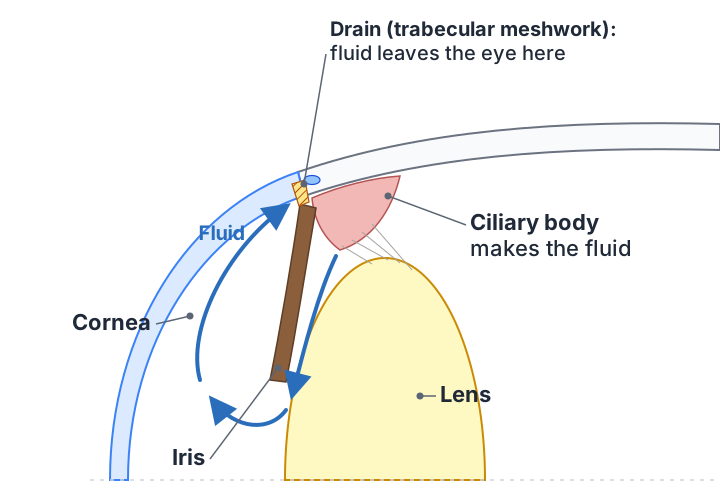
Eye pressure is measured in millimeters of mercury (mm Hg). "Normal" is often quoted as 10 to 21 mm Hg, but the number that is safe for one person's nerve may be too high for another's. Some people develop glaucoma with pressures in the normal range (sometimes called normal-tension glaucoma), and some people have higher pressures for years without damage (ocular hypertension). That is why your doctor follows the nerve itself, not just the pressure.
Why there are usually no symptoms
The most common form, primary open-angle glaucoma, takes away peripheral (side) vision first and very gradually. The two eyes overlap and the brain fills in gaps, so most people notice nothing until a great deal of nerve has already been lost. There is no pain, no redness, and no change in reading vision until late. This is why glaucoma is found at routine eye exams and why regular follow-up matters even when you feel fine.
Angle-closure glaucoma is different and less common. The drainage angle becomes physically blocked by the iris. If that happens suddenly, pressure spikes and causes a red, painful eye, blurred vision, halos around lights, headache and nausea. That is an emergency and needs same-day care. More often angle closure develops slowly and silently, and is found on exam.
Other types include pseudoexfoliation and pigmentary glaucoma (material clogs the drain), secondary glaucoma from inflammation, injury, steroid medicines or other eye disease, and congenital glaucoma in infants.
Who is at risk
- Higher eye pressure
- Age over 60 (over 40 for people of African descent)
- A parent or sibling with glaucoma
- African, Hispanic, or Asian ancestry (depending on the type)
- Thin corneas
- Significant nearsightedness or farsightedness
- Diabetes, migraines, low blood pressure, or sleep apnea
- Long-term steroid use, including some inhalers and skin creams
- Previous eye injury or surgery
How it is diagnosed
No single test makes the diagnosis. Your doctor combines eye pressure, a look at the optic nerve, imaging of the nerve fiber layer (OCT), a visual field test, a measurement of corneal thickness, and a look at the drainage angle. The Glaucoma Testing page walks through each one and what to expect.
How it is treated
Lost nerve fibers cannot be restored, so the goal of every treatment is to lower eye pressure enough to stop further loss. Your doctor sets a target pressure for your eye and adjusts it over time based on whether the nerve and visual field stay stable.
There are three ways to lower pressure, often used in combination:
- Eye drops. The most common first step. Some reduce fluid production, others improve drainage. Most are used once or twice a day, long term. See Using Eye Drops for technique, and the Eye Medication Reference for the specific drops.
- Laser. Selective laser trabeculoplasty (SLT) treats the drain itself, takes a few minutes in the office, and can be a first treatment instead of drops or an addition to them. A different laser (iridotomy) is used for angle closure.
- Surgery. When drops and laser are not enough, surgery creates a new path for fluid. Options range from minimally invasive glaucoma surgery (MIGS), often done with cataract surgery, to trabeculectomy and tube shunt surgery for more advanced disease.
Living with glaucoma
Glaucoma is a lifelong condition, but with treatment and regular follow-up most people keep useful vision for life. The things that make the biggest difference are using your drops every day as prescribed, keeping your appointments even when nothing seems wrong, telling your doctor about side effects rather than quietly stopping a drop, and letting close relatives know they should be checked.