What Is Dry Eye?
Dry eye is a problem with the tear film, the thin layer of tears that coats the front of the eye. When there are too few tears, or they evaporate too quickly, the surface dries out between blinks. The eye then burns, feels gritty, blurs on and off and, surprisingly often, waters. It is very common, more so with age, and it is usually a long-term condition that is managed rather than cured.
Choose a kind of tear film below and press Play to see what happens between blinks.
The animation needs JavaScript. The pictures and the explanation below cover the same thing.
The tear film
Tears are more than water. The tear film has three parts:
- A mucus layer against the eye, which helps the tears spread and stick.
- A watery layer, the bulk of the tears, made by the tear glands above the outer corner of each eye.
- An oil layer on top, made by a row of small glands in the eyelids (the meibomian glands). It works like a lid on a pot: it slows evaporation and keeps the film smooth.
Each blink spreads a fresh film across the eye, and the old tears drain away through two small openings at the inner corner of the lids and down into the nose. That is why your nose runs when you cry.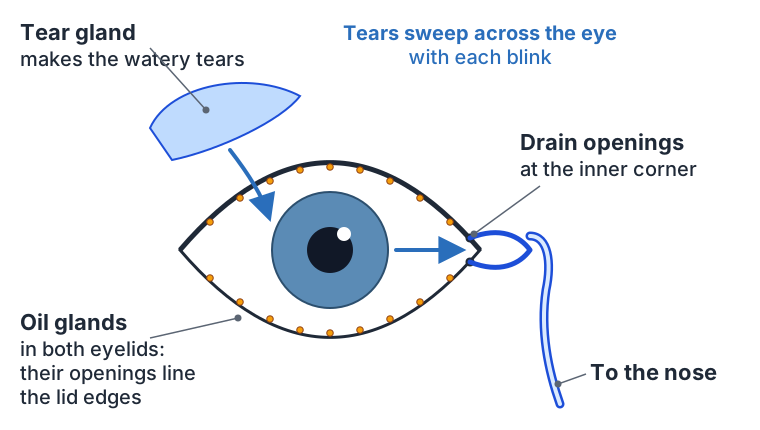
Two kinds of dry eye
- Not enough oil (evaporative dry eye). This is the more common kind. The oil glands in the eyelids are blocked or make poor-quality oil, so the tears evaporate too fast. It usually goes along with eyelid inflammation. See Blepharitis and the Eyelid Glands.
- Not enough tears (aqueous-deficient dry eye). The tear glands make too little of the watery layer. This becomes more common with age and is also seen with some medicines and with autoimmune conditions such as Sjögren's syndrome and rheumatoid arthritis.
Many people have some of both. Either way the surface of the eye becomes irritated and inflamed, and inflammation in turn makes the tears worse, so dry eye tends to feed itself until the cycle is broken.
What it feels like
- Burning, stinging or a gritty, sandy feeling
- A feeling that something is in the eye
- Vision that blurs and then clears with a blink, often worse when reading, driving or using a screen
- Watering. Dry spots irritate the eye, and it answers with a flood of watery reflex tears that do not stay on the surface. See Watery Eyes.
- Redness and tired eyes, usually worse late in the day
- Sensitivity to light, wind, smoke or air conditioning
- Trouble wearing contact lenses
To see the on-and-off blur, try "Dry eye" in the vision loss simulator.
Dry eye or allergy?
The two are easy to confuse, and many people have both.
- Itching is the mark of allergy. Dry eye burns and feels gritty more than it itches.
- Allergy tends to come with a season or a trigger such as pollen, dust or pets, often with sneezing and a runny nose, and with puffy lids.
- Dry eye is there year round, and is worse late in the day, with screens and in dry air.
The difference matters because the treatments differ. Antihistamine pills, in particular, can make dry eye worse. See Eye Allergy.
What brings it on or makes it worse
- Age, and hormonal changes after menopause
- Screens and reading. People blink about half as often when concentrating.
- Dry or moving air: heating, air conditioning, fans, car vents, wind
- Medicines: antihistamines, decongestants, some antidepressants, blood pressure medicines and others
- Eye drops with preservatives, including some glaucoma drops used long term. If you use glaucoma drops and your eyes burn, tell your doctor. A preservative-free version may be an option, but do not stop the drops on your own.
- Eyelid problems: blepharitis, rosacea, lids that do not close fully
- Contact lenses, and previous eye surgery including LASIK and cataract surgery
- Medical conditions: Sjögren's syndrome, rheumatoid arthritis, lupus, thyroid disease, diabetes
How it is checked
Dry eye is diagnosed at the slit lamp, the microscope used at your eye exam. Your doctor looks at the lid edges and oil glands, the amount of tears along the lower lid, and the surface of the eye. A drop of yellow-green dye shows how quickly the tear film breaks up after a blink and whether there are dry, damaged spots on the surface, as in the "With dye" view of the animation above. In dry eye from poor oil, dark patches open up all over the surface within seconds. When too few tears are made, the line of tears along the lower lid is thin and the dry band sits low on the eye, where it is most exposed. Sometimes a small strip of paper at the lid edge is used to measure how many tears are made.
Why it matters
For most people dry eye is a nuisance, not a danger to sight. It is still worth treating: it affects comfort and the quality of vision every day, and the tear film has to be healthy for accurate measurements before cataract surgery and for good results after it. Severe dry eye can damage the surface of the eye and does need close care.
What can be done is covered in Treating Dry Eye.
Questions worth asking
- Which kind of dry eye do I have?
- Could any of my medicines or eye drops be contributing?
- What should I do every day, and what should I add on bad days?