Using Eye Drops
Eye drops only work if they get into the eye, and the technique matters more than most people expect. Studies that watch patients put in drops find that many miss the eye, touch the tip to the lashes, or put in several drops at once. These steps make each drop count.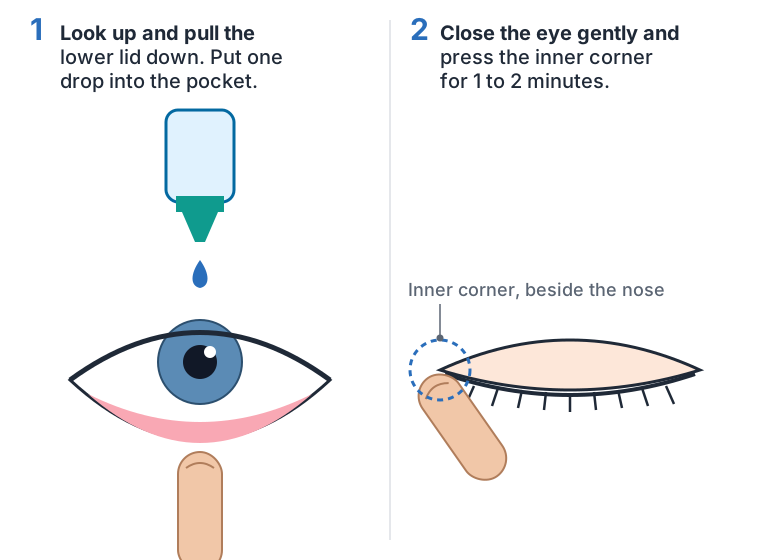
Putting in a drop
- Wash your hands.
- Shake the bottle if the label says to (suspensions such as prednisolone settle out).
- Tilt your head back, or lie down. Many people find it easiest lying flat on a bed.
- Pull the lower lid down with one finger to make a small pocket.
- Look up, hold the bottle above the eye, and squeeze one drop into the pocket. Do not let the tip touch the eye, the lashes or your fingers. If you are not sure the drop went in, it is fine to put in one more.
- Close the eye gently (don't squeeze) for one to two minutes.
- Press lightly on the inner corner of the closed eye, beside the nose, with a fingertip for the same one to two minutes. This closes the tear duct so the medicine stays on the eye instead of draining into the nose and throat. It improves the effect and reduces side effects such as a bitter taste or, with some drops, a slow heart rate or breathing symptoms.
- Blot any overflow from the closed lid with a tissue. Don't wipe the open eye.
A single drop is about three times more than the eye can hold, so a second drop of the same medicine adds nothing but cost and side effects.
More than one drop at the same time
If you use two or more different drops at the same time of day, wait at least five minutes between them. A second drop put in right away simply washes the first one out. Order generally does not matter, but if one of your medicines is an ointment or a gel, use it last, because it blocks anything placed after it.
The Eye Drop Schedule Builder lays out a daily routine with the drops already spaced five minutes apart, and can add reminders to your phone.
If you have trouble aiming
- Rest the hand holding the bottle on your forehead or cheek so it is steady, with the tip over the eye.
- Use a mirror or ask someone to help.
- Drop into the inner corner with your eye closed, then open the eye and let the drop run in. This works well for people who cannot keep their eye open.
- Ask about a drop guide. Inexpensive plastic aids hold the bottle at the right spot above the eye and are available at most pharmacies.
- Refrigerate the bottle if the label allows it (check with your pharmacist). A cold drop is easier to feel, so you know whether it landed.
Missed doses
If you forget a dose, put it in as soon as you remember, unless it is nearly time for the next one; in that case skip it and carry on with your schedule. Do not double up. Missing a dose occasionally is not dangerous, but glaucoma drops only control pressure while they are being used, so tell your doctor honestly how often you miss. There is often a simpler schedule or a different drop that fits your day better.
Contact lenses
Most glaucoma drops contain a preservative that contact lenses absorb. Take lenses out before putting in drops and wait about 15 minutes before putting them back in, unless your doctor tells you otherwise. Preservative-free drops in single-use vials are an option if you wear lenses or have dry eye.
Storage and the bottle
- Keep the cap on and store at room temperature unless the label says to refrigerate (some, like latanoprost, are kept cold until opened).
- Never let the tip touch anything. A contaminated bottle can cause an infection.
- Most bottles should be discarded a set time after opening, often 28 days for preservative-free multidose bottles and up to several months for others. Your pharmacist can tell you for each one.
- Cap colors follow a standard: for example teal or turquoise for prostaglandins, yellow or blue for beta blockers, orange for carbonic anhydrase inhibitors, purple for alpha agonists, pink for steroids, tan for antibiotics and gray for NSAIDs. The Eye Medication Reference shows a photo and cap color for each drop so you can tell bottles apart.
Refills and cost
A 2.5 mL bottle contains roughly 50 to 75 drops, so a once-daily drop in both eyes lasts about a month and a twice-daily drop in both eyes about two weeks. Call for a refill a week before you expect to run out so you never have a gap. If a drop is unaffordable, say so; there is nearly always a generic or an alternative, and some manufacturers have assistance programs.
Side effects worth reporting
Mild stinging for a few seconds is common. Tell your doctor about redness that does not settle, itching or swollen lids, blurred vision that lasts, eyelash growth or a change in iris color (prostaglandins), feeling tired or short of breath (beta blockers), a dry mouth or drowsiness (alpha agonists), or a metallic taste (carbonic anhydrase inhibitors). Do not stop a glaucoma drop on your own; call first.