Trabeculectomy
Trabeculectomy is the traditional glaucoma operation and still one of the most effective ways to lower eye pressure. It is used when drops and laser cannot bring pressure to target, when glaucoma is advanced or progressing, or when a very low pressure is needed to protect a badly damaged nerve.
How it works
The surgeon makes a small trapdoor in the white wall of the eye (the sclera) under the upper eyelid and removes a tiny piece of tissue beneath it, creating a new path for fluid to leave the eye. The fluid collects under the conjunctiva, the thin clear skin over the white of the eye, in a small blister called a bleb, and is absorbed into the blood vessels there. The bleb sits under the upper lid and is not normally visible.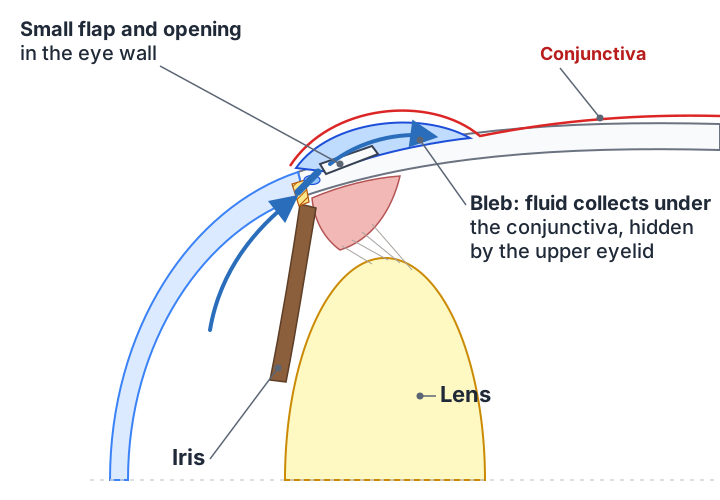
Because the body tries to heal and close any new opening, a medicine that slows scarring (mitomycin C) is applied briefly during surgery, and the surgeon places adjustable stitches in the trapdoor. In the weeks afterward these stitches may be loosened with a laser or removed in the office to fine-tune how much fluid drains. This adjustability is what allows trabeculectomy to reach low pressures, but it also means the first few months involve close follow-up.
The day of surgery
Trabeculectomy is done at an outpatient surgery center, usually with a local anesthetic block and sedation so you are comfortable and the eye does not move. It takes about 45 to 60 minutes. You go home the same day with a patch and shield and need a driver.
Tell your surgeon about blood thinners well beforehand; some may need to be paused, and others can continue.
Recovery
Recovery from trabeculectomy is longer and more involved than from cataract surgery, and it is normal for vision to be blurry for several weeks while the eye settles and pressure finds its level.
Drops. You will use a steroid drop frequently at first (often eight times a day) and taper it slowly over about twelve weeks; the steroid controls scarring as much as inflammation, so the long taper matters. An antibiotic is used for the first week and an antibiotic ointment at bedtime for about two weeks. The Post-Op Eye Drop Schedule tool prints this out day by day. Your glaucoma drops in the operated eye are usually stopped; keep using drops in the other eye unless told otherwise.
Visits. Expect to be seen the next day, then weekly for several weeks, then at increasing intervals. Pressure is checked at each visit and the bleb examined. Stitch adjustment, if needed, is done at these visits and takes a minute.
Activity. Wear the shield at night for two weeks. For about a month: no rubbing the eye, no bending with your head below your waist, no lifting more than about ten pounds, no swimming, and no straining. Walking, reading and screens are fine. Ask about returning to work; a desk job is often possible within one to two weeks.
Vision and glasses. Vision usually returns to about its previous level over one to three months. The operation can change your glasses prescription, so a new prescription is checked once things are stable, typically around three months.
Warning signs: call the same day
- Pain that is getting worse rather than better
- Increasing redness
- A sudden drop in vision
- Discharge from the eye
- Light sensitivity that develops after the first few days
The bleb remains a slightly thinner spot on the eye for life, so an eye that becomes red, painful or sticky at any time in the future, even years later, should be seen promptly, because an infection of the bleb can spread inside the eye. Most patients never have this problem, but knowing to act quickly matters.
Results and risks
Trabeculectomy achieves target pressure without drops in a majority of eyes, and with drops in most of the rest. The effect can fade over years as scarring progresses, in which case drops, bleb revision or another operation may be needed.
Complications are more frequent than with less invasive procedures, which is why trabeculectomy is reserved for eyes that need it. The common ones in the early weeks are pressure that is too low (hypotony) or too high, which the surgeon manages by adjusting stitches or with extra visits, and bleeding or leaking that usually settles. Less common are cataract progression, a persistently low pressure that affects vision, and, rarely, infection or bleeding inside the eye. Your surgeon will discuss which of these are most relevant to your eye.
Questions worth asking
- What target pressure are we aiming for?
- How many visits should I expect in the first three months?
- What are my restrictions and for how long?
- What should I do if the eye becomes red or painful years from now?