SLT Laser
Selective laser trabeculoplasty (SLT) is an office procedure that lowers eye pressure by treating the trabecular meshwork, the eye's natural drain. It takes a few minutes, is done at a slit lamp much like an eye exam, and has no cuts or stitches. It is used for open-angle glaucoma and ocular hypertension, either as a first treatment instead of drops or alongside them.
How it works
The laser delivers very short pulses of light that are absorbed by pigment in the drainage meshwork. The energy is low and selective, so it does not burn or scar the tissue. Instead it triggers a biological response that, over several weeks, improves how well the meshwork drains fluid. A large clinical trial (the LiGHT trial) found that SLT as a first treatment controlled pressure as well as drops in most patients, with many needing no drops at all for years afterward.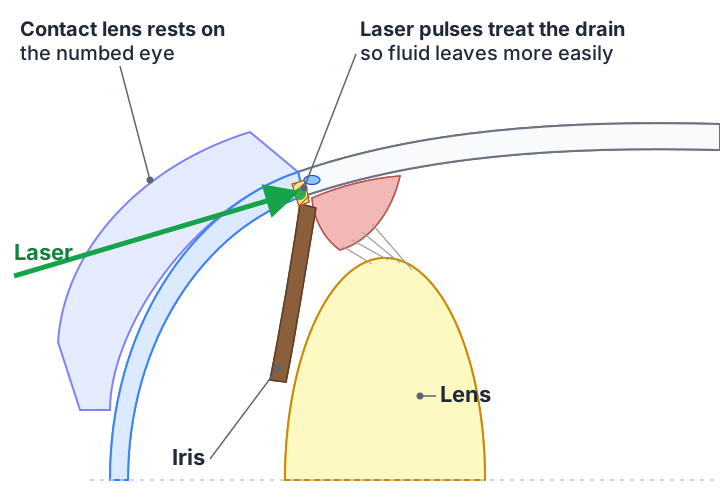
Why your doctor might suggest it
- To avoid or delay starting daily drops
- To reduce the number of drops you use
- When drops are hard to use, cause side effects, or are not being taken reliably
- When pressure is not quite at target on current treatment
SLT lowers pressure by roughly 20 to 30 percent on average, about the same as a single drop. It works in most but not all eyes, and the effect can wear off over one to five years; it can usually be repeated.
The visit
- A pressure-lowering drop and a numbing drop are placed in the eye.
- You sit at the laser, which looks like the slit lamp used for your exams, with your chin and forehead on the rests.
- A contact lens is placed on the eye to hold the lids open and focus the laser on the drainage angle. You may feel light pressure from the lens.
- The doctor applies the laser around the angle, usually 50 to 100 spots, over a few minutes. You will see flashes of light and may feel brief tingling or a small pinch with some pulses.
- Pressure is checked again before you leave, or at a visit soon after.
Both eyes can be treated the same day or on separate visits. You can drive afterward if your vision is adequate and you were not dilated, but many people prefer to bring a driver.
After the laser
- Mild ache or light sensitivity for a day or two is common. Over-the-counter pain relievers and sunglasses help.
- Blurred vision from the gel used with the contact lens clears within a few hours.
- You may be given an anti-inflammatory drop for a few days, or none at all, depending on your doctor's preference.
- Keep using your glaucoma drops unless you are told to stop. SLT takes four to six weeks to reach its full effect, so drops are not usually changed until a follow-up pressure check.
- There are no activity restrictions.
Risks
SLT is one of the safest glaucoma procedures. A temporary rise in eye pressure in the first hours is the main concern, which is why pressure is checked afterward and a preventive drop is used. Inflammation is mild and brief. Rarely, pressure rises and stays higher, or the laser does not lower pressure enough and other treatment is needed. The laser does not affect your vision, prescription or ability to have cataract or other surgery later.
Questions worth asking
- Is SLT instead of drops or in addition to them for me?
- When will we know whether it worked?
- If it works, can any of my drops be stopped?
- If it wears off, can it be repeated?