Eye Allergy
Eye allergy (allergic conjunctivitis) is the eye's version of hay fever. Something harmless in the air sets off a reaction in the clear lining of the eye, and the eyes itch, redden, water and swell. It is very common, it is not contagious, and it does not damage sight. It can make a season miserable, and it is very treatable.
Press Play to see what happens in the lining of the eye, and what allergy drops do.
The animation needs JavaScript. The explanation below covers the same thing.
What it looks and feels like
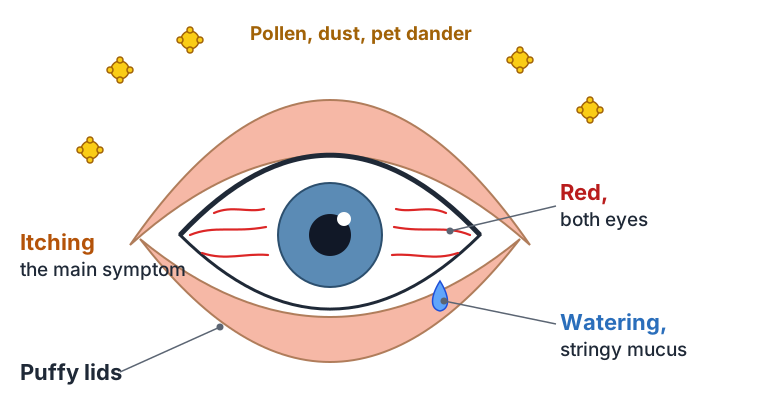
- Itching. This is the mark of allergy. If the eyes do not itch, it is probably something else.
- Redness, usually in both eyes
- Watering, and a clear, stringy mucus
- Puffy lids, sometimes with dark circles under the eyes
- Often sneezing, a runny or stuffy nose, or an itchy throat at the same time
Triggers
- Seasonal: tree pollen in spring, grass in summer, ragweed in the fall
- Year round: dust mites, pet dander, mould
- Contact: eye makeup, face creams, and sometimes eye drops themselves or their preservatives. This kind tends to make the lid skin red and scaly.
- Contact lenses can set off an allergy-like reaction under the upper lid, with itching and mucus that make the lenses uncomfortable.
Allergy, dry eye or pink eye?
- Allergy: itching, both eyes, clear watery discharge, comes with a season or a trigger.
- Dry eye: burning and grittiness more than itching, worse late in the day and with screens, there year round.
- Infection (pink eye): often starts in one eye and spreads to the other, with a sticky or crusting discharge, sometimes with a cold. It is contagious.
Allergy and dry eye often occur together, and each makes the other worse.
What helps
Avoid the trigger where you can.
- Keep windows closed and use air conditioning on high-pollen days
- Wear glasses or sunglasses outdoors
- Wash your hands and face, and rinse your eyelids, after being outside or handling pets
- Shower and wash your hair before bed in pollen season
Do not rub. Rubbing feels good for a moment and then releases more histamine. Hard rubbing over years can also weaken the cornea.
Cool the eyes. A cool compress, and artificial tears kept in the refrigerator, calm the itch and rinse the allergen away.
Allergy eye drops. Drops such as ketotifen (Zaditor, Alaway) and olopatadine (Pataday) are sold without a prescription; both are pictured in the Eye Medication Reference. They block histamine and also steady the allergy cells so they release less. They work within minutes, and they work best used every day through your season, not only when the eyes itch. Most are used once or twice a day.
Allergy pills help the nose more than the eyes, and they can dry the eyes out. If your eyes are the main problem, drops usually do better.
Avoid "get the red out" drops. They whiten the eye for an hour or two, and the redness often comes back worse.
When more is needed
- Prescription allergy drops for symptoms that break through
- A short course of a mild steroid drop for a severe flare. Steroid drops are used only under an eye doctor's care, for a short time, because they can raise eye pressure and cause cataract. That matters most if you have glaucoma.
- Seeing an allergist about testing and allergy shots, when allergies are severe or year round
Call the office if
- One eye is much worse than the other, or the discharge is thick and sticky
- The eye is painful or light-sensitive, or your vision drops. See When to Call the Same Day.
- Symptoms have not improved after a week or two of treatment
Questions worth asking
- Is this allergy, dry eye, or both?
- When should I start my drops each year, and when can I stop?
- Are my drops safe to use with contact lenses?