Blepharitis and the Eyelid Glands
Blepharitis is inflammation of the edges of the eyelids. It is very common, it tends to come and go for years, and it is the most frequent cause of dry eye. It is not an infection you can pass to someone else, and it rarely harms sight, but it can make eyes sore, red and tired day after day. Daily lid care is the main treatment, and it works when it is kept up.
The oil glands in the eyelids
Each eyelid holds a row of about 25 to 30 small glands, the meibomian glands, that open along the lid edge just behind the lashes. With every blink they release a little oil onto the tears. The oil forms the top layer of the tear film and keeps the tears from evaporating.
In many people the oil becomes thick, more like toothpaste than olive oil, and plugs the gland openings. This is called meibomian gland dysfunction. The tears then evaporate too quickly, and the trapped oil irritates the lid.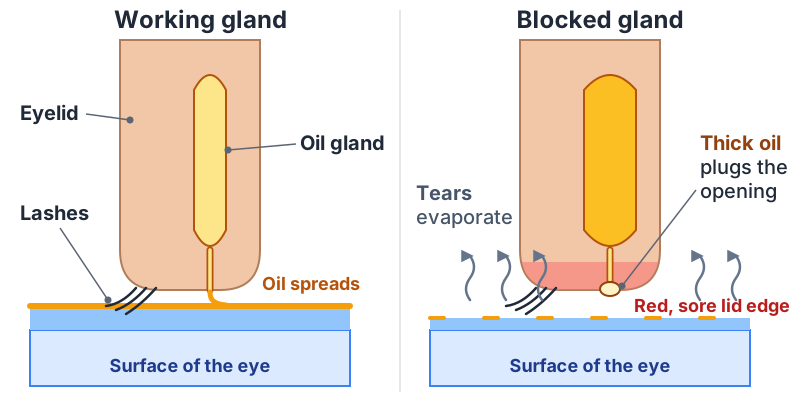
Kinds of blepharitis
- At the oil glands (posterior blepharitis). The blocked glands described above. It is common with age and in people with rosacea, a skin condition that causes facial redness and flushing.
- At the lashes (anterior blepharitis). Crusts and flakes collect at the base of the lashes, from bacteria that normally live on the skin or from dandruff-like skin conditions.
- Demodex. Tiny mites that live in the lash follicles of most adults can overgrow and cause itching and waxy sleeves around the base of the lashes.
They often occur together.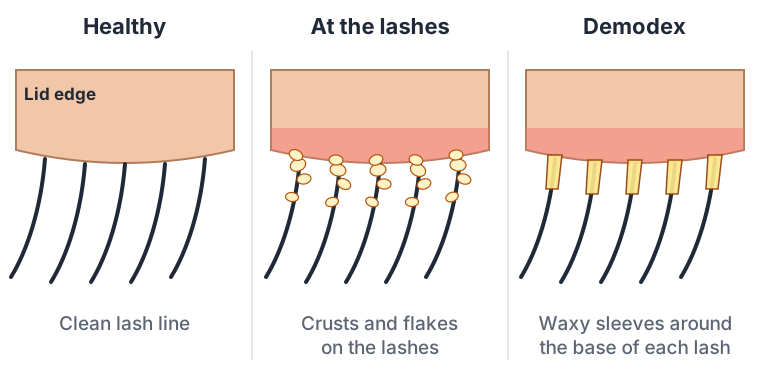
What it feels like
- Burning, gritty or itchy eyes, often worst in the morning
- Red, swollen or greasy-looking lid edges
- Crusting or flakes on the lashes, or lids stuck together on waking
- Foamy tears, watering, and vision that blurs and clears with a blink
- Styes and chalazia: tender or painless lumps in the lid, from a blocked gland
- Lashes that fall out or grow in the wrong direction, in long-standing cases
Daily lid care
This is the treatment that matters most. It takes a few minutes, and it needs to be done regularly, like brushing teeth. Expect it to take two to four weeks to make a difference. Press Play to see what each step does to a blocked gland.
The animation needs JavaScript. The steps below cover the same thing.
- Warm compress. Hold something comfortably warm against the closed lids for 5 to 10 minutes, once or twice a day. A microwaveable eye mask holds its heat better than a washcloth, which cools in a minute or two. The warmth melts the thick oil.
- Massage. Straight afterward, with a clean finger, gently roll along the lids toward the lashes: downward on the upper lid, upward on the lower lid. This pushes the softened oil out.
- Clean the lid edges. Wipe along the base of the lashes with a commercial lid wipe or lid cleanser. Products with hypochlorous acid or tea tree oil are used when there are crusts or Demodex.
On top of that:
- Artificial tears ease the dryness. See Treating Dry Eye.
- Take off eye makeup fully every night, and avoid eyeliner on the inner rim of the lid, where it covers the gland openings.
Styes and chalazia
Blocked glands are also behind the lumps that come up in eyelids.
- A stye is a red, tender bump at the lash line, from an infected lash follicle or gland. It comes up over a day or two and usually drains and settles within a week.
- A chalazion is a firm lump further into the lid, from a blocked oil gland. It is usually painless once the first tenderness settles, and it can last for weeks or months.
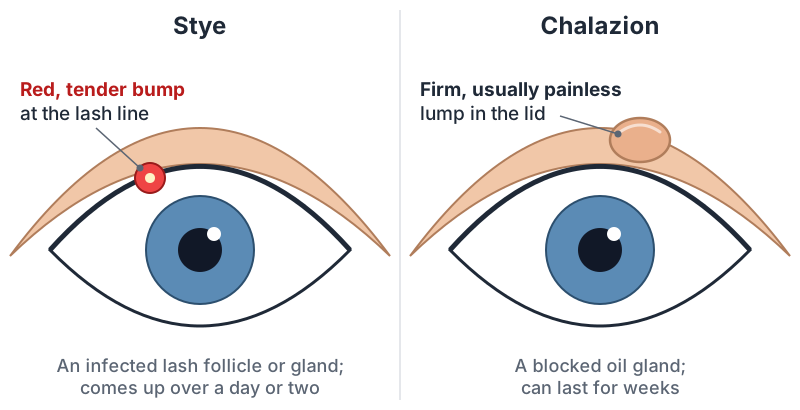
Both are treated first with warm compresses, several times a day. Do not squeeze them. A chalazion that has not gone after a month or so can be treated in the office.
When more is needed
- An antibiotic ointment on the lid edges at bedtime, for a few weeks, when crusting is heavy.
- Doxycycline by mouth in a low dose for several weeks. It is used here to thin the oil and calm inflammation more than to kill bacteria, and it is especially helpful with rosacea. It can upset the stomach and makes skin burn more easily in the sun.
- Lotilaner drops (Xdemvy), a prescription drop used twice a day for six weeks, for Demodex.
- A short course of a steroid drop or ointment during a flare.
- In-office treatments that heat and express the glands, or light-based treatment for rosacea. These are not always covered by insurance.
- A chalazion that does not settle with warm compresses can be drained in the office.
The drops and pills named here are pictured in the Eye Medication Reference.
Call the office if
- A lid becomes very swollen, red and painful, or the redness spreads onto the cheek
- A lump in the lid keeps growing, bleeds, or comes back in the same spot
- Your vision drops or the eye itself becomes painful and red. See When to Call the Same Day.
Questions worth asking
- Is my blepharitis at the glands, at the lashes, or both?
- How long should I keep up the warm compresses?
- Do I have signs of rosacea or Demodex?