Patient information
Trabeculectomy
Glaucoma surgery that makes a new drain under the upper eyelid, for pressure that drops and laser cannot control.
Scan for the full page, with an animation
What it is
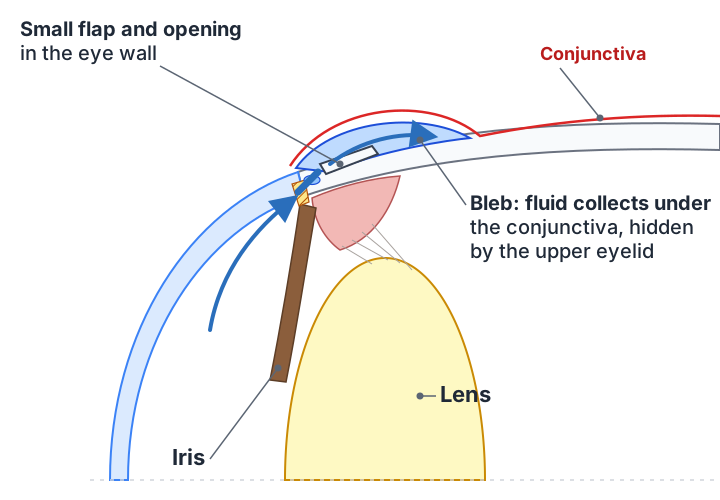
The surgeon makes a small trapdoor in the wall of the eye under the upper lid. Fluid leaves through it and collects in a small blister, the bleb, hidden under the lid, where it is absorbed. Stitches in the trapdoor can be loosened in the weeks afterward to fine-tune the pressure, so the first months involve close follow-up.
The day of surgery
- Outpatient, with a numbing block and sedation; about 45 to 60 minutes.
- You go home with a patch and shield. Bring a driver.
- Ask well beforehand about any blood thinners.
Recovery
- Vision is often blurry for several weeks.
- Drops: a steroid often eight times a day at first, tapered slowly over about twelve weeks; an antibiotic for the first week; an antibiotic ointment at bedtime for about two weeks. Glaucoma drops in the operated eye are usually stopped; keep using drops in the other eye unless told otherwise.
- Visits: the next day, then weekly for several weeks. Stitch adjustments take a minute in the office.
- Wear the shield at night for two weeks.
- For about a month: no rubbing, no bending with your head below your waist, no lifting more than about ten pounds, no swimming or straining.
Call the same day if
- Pain getting worse rather than better
- Increasing redness, or discharge
- A sudden drop in vision
- Light sensitivity that starts after the first few days
For life: an eye that turns red, painful or sticky at any time, even years later, should be seen promptly.