Patient information
Micropulse and CPC Laser
A laser applied through the white of the eye that lowers pressure by reducing how much fluid the eye makes.
Scan for the full page, with an animation
What it does
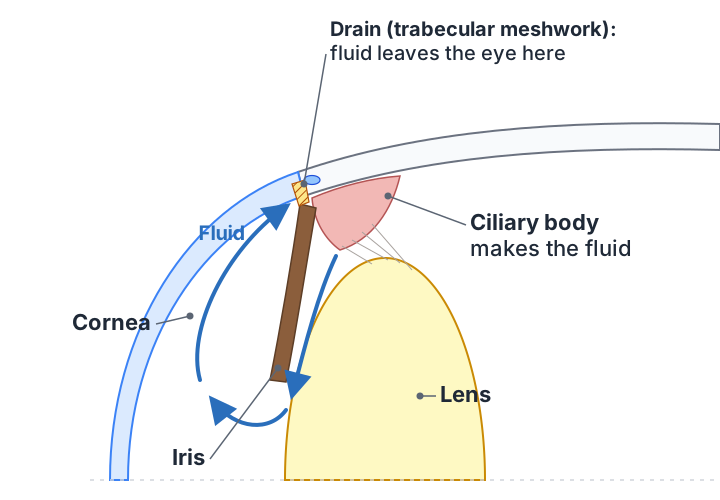
Cyclophotocoagulation (CPC) treats the ciliary body, the tissue behind the iris that makes the eye's fluid, through the white of the eye. Less fluid is made, so the pressure falls. There are no cuts or stitches.
- Micropulse delivers the laser in gentle bursts. It is done with numbing drops and sedation, causes less inflammation, and is milder; it may need repeating.
- Standard CPC is stronger, with more inflammation afterward. It is done with a numbing injection behind the eye and is used mostly in eyes with poor vision.
The day of the laser
- In a procedure room or operating room; the laser itself takes a few minutes.
- The eye may be patched for the rest of the day. Bring a driver.
Afterward
- Aching, redness and blurry vision for a few days are expected.
- A steroid drop for at least a month, stepping down each week. After micropulse: four times a day, then three, two and one. After standard CPC: eight times a day, then six, four, three, two and one. Your doctor may change this for your eye.
- Keep using your glaucoma drops unless told otherwise. The full effect takes about a month.
- If the pressure is not low enough, the laser can be repeated.
Call the same day if
- Severe pain, or pain that is getting worse
- A marked drop in vision
- Increasing redness