Patient information
Cataract Surgery
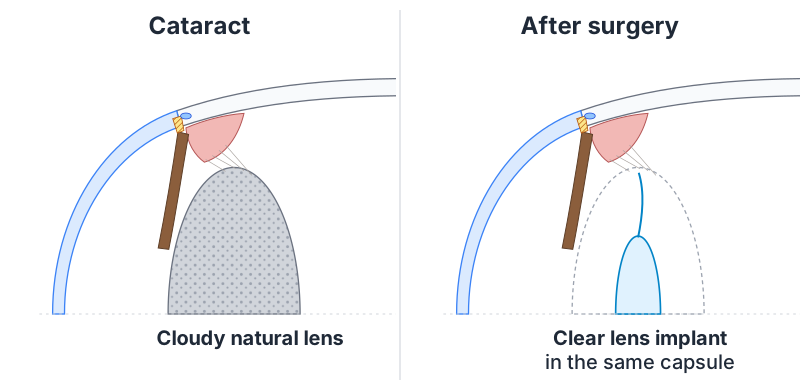
The cloudy natural lens is replaced with a clear lens implant, as an outpatient, usually in under half an hour.
Scan for the full page, with an animation
Before
- The eye is measured to choose the power of the lens implant. Contact lenses may need to stay out for some days first.
- Choose the kind of implant with your surgeon: it decides what you will see without glasses.
- Tell the team about tamsulosin (Flomax) or similar medicines, blood thinners (usually continued; confirm first), diabetes and allergies.
- Fill your drop prescriptions early, and arrange a driver.
The day of surgery
- Follow the eating and drinking instructions. Take your usual medicines unless told otherwise.
- Expect two to three hours at the center. The eye is numbed and you are given light sedation; the operation takes about 10 to 20 minutes.
- You go home with a shield over the eye.
The first weeks
- A check the next day or within a few days.
- Use the drops exactly as prescribed. A typical plan is an antibiotic for a week and a steroid and an anti-inflammatory for about four weeks.
- Wear the shield at night for about a week. Do not rub the eye.
- No heavy lifting or bending with your head down for the first week; no swimming or hot tubs for two weeks. Showering is fine; keep soap out of the eye.
- Reading and screens are fine. Drive once your vision allows and your surgeon agrees.
- Glasses are usually checked about four weeks after surgery.
Normal: a scratchy feeling, mild ache, light sensitivity, a red patch on the white of the eye, colors looking brighter.
Call the same day if
- Vision gets worse after it had started to improve
- Pain is increasing or severe
- Redness increases, or there is discharge
- You see many new floaters, flashes, or a curtain over your vision